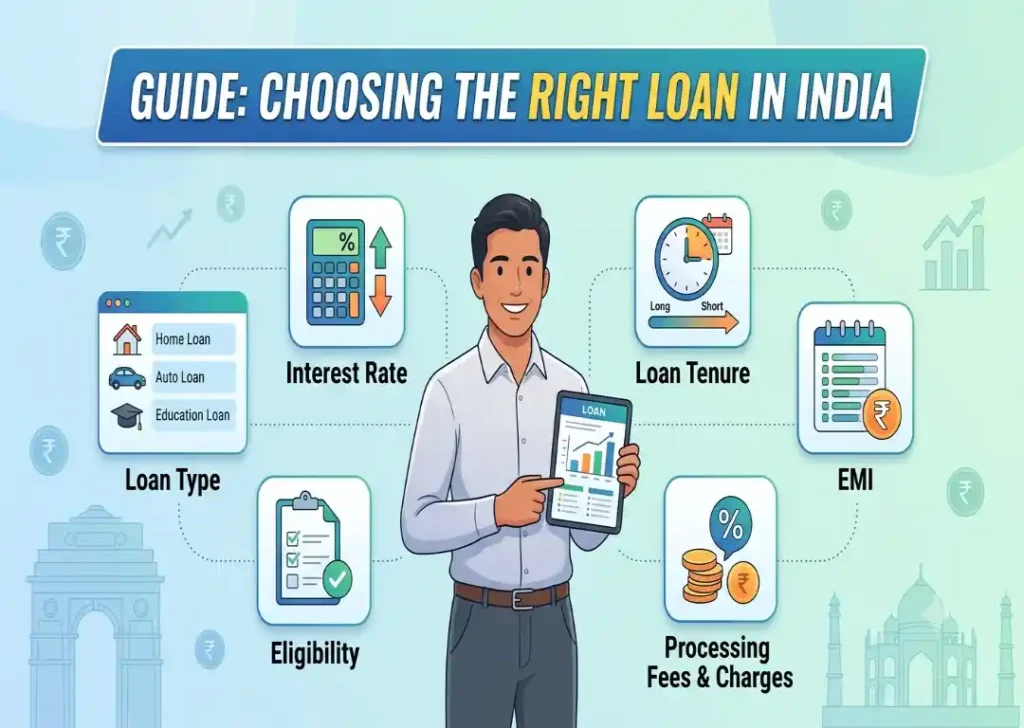
Business Loan Application Process in India: A Step-by-Step Guide for 2026
Planning to apply for a business loan? Understand the application process, eligibility checks, documents, EMI planning and important things to review before taking the next step.
Quick Answer
The business loan application process generally involves identifying your funding requirement, checking your financial and business profile, preparing documents, submitting an application, completing the applicable lender’s assessment and reviewing the final loan terms.
Eligibility, loan amount, interest rate, tenure, fees, security requirements and approval depend on the applicable lender and the applicant’s profile.
What Is a Business Loan?
A business loan is financing provided for eligible business-related purposes. Depending on the loan product and lender, financing may support working capital, inventory, business expansion, equipment, machinery and other eligible business requirements.
However, applying for a business loan is not simply about choosing a loan amount and submitting a form. Your business profile, financial records, credit history, existing obligations and repayment capacity may all be relevant to the lender’s assessment.
Step 1: Identify Why You Need the Loan
Before applying, clearly define how much funding your business needs and what you intend to use it for.
Working Capital
Manage eligible day-to-day operating and cash-flow requirements.
Business Expansion
Explore financing for eligible growth, additional capacity or operational expansion.
Inventory
Funding may be available for eligible inventory and stock requirements.
Equipment
Explore financing for eligible machinery, equipment or productive business assets.
Business Purchases
Some loan products may support eligible business purchases.
Other Requirements
The permitted end-use depends on the specific lender and product.
Knowing the purpose of the loan helps you estimate the amount you actually require instead of borrowing more than necessary.
Step 2: Estimate How Much You Can Repay
One of the most important steps before applying is understanding your potential monthly repayment.
A loan creates an ongoing financial obligation, so the proposed EMI should be considered against your business cash flow.
- Current monthly business income and cash flow
- Regular operating expenses
- Existing EMIs and other debt obligations
- Supplier and employee payments
- Seasonal fluctuations in revenue
- Expected cash flow after taking the loan
You can use the BusinessLoan.Credit EMI Calculator to estimate monthly EMI, total interest and overall repayment.
Step 3: Check Your Business Loan Eligibility
There is no single eligibility formula that applies to every business loan. Different lenders may evaluate different aspects of the applicant and business.
Business Profile
Business type, operating history, revenue, industry, registration and other profile information may be considered.
Credit Profile
Credit history, repayment behaviour, existing loans and other financial obligations may form part of the assessment.
Repayment Capacity
Lenders may assess whether the proposed repayment is appropriate in relation to income, cash flow and existing commitments.
Banking & Financial Records
Banking activity, tax information and financial records may be requested during the application and verification process.
A useful starting point is to review your overall financial position rather than focusing on a single credit-score number.
Read more: What Affects Loan Eligibility?
Step 4: Prepare Your Business Loan Documents
Preparing your documents in advance can make the application process more organised. Exact documentation depends on the lender, business type and loan product.
- PAN / KYC Documents: Identity and KYC information as requested by the lender.
- Business Proof: Registration, address or ownership-related documents where applicable.
- Bank Statements: Recent banking records requested by the lender.
- Financial Statements: Income, business financial or related records where required.
- GST / Tax Records: Relevant records where applicable to the business.
- ITR / Business Records: Tax returns and other financial information requested during assessment.
- Additional Documents: The lender may request other information depending on your application.
Make sure the information across your documents is accurate, consistent and up to date.
Step 5: Compare Your Business Loan Options
Before submitting an application, understand the loan structure and compare the complete borrowing cost.
| Factor | What to Check |
|---|---|
| Loan Amount | How much funding does your business actually require? |
| Interest Rate | What interest rate and structure applies? |
| Tenure | How long will the repayment continue? |
| Processing Fees | What processing or documentation charges apply? |
| Other Charges | Review any additional charges disclosed by the lender. |
| Prepayment Terms | Understand applicable rules for early or partial repayment. |
| Late Payment | Check applicable consequences of delayed repayment. |
| Security Requirements | Confirm whether collateral or other security is required. |
The lowest advertised EMI does not necessarily represent the lowest total borrowing cost. Consider the rate, tenure, fees and complete repayment structure together.
Step 6: Submit Your Business Loan Application
Once you have understood your requirement and the applicable loan conditions, you can begin the application process.
Share Your Business Details
Provide basic information about your business, funding requirement and intended purpose.
Discuss Available Options
Understand the available financing route based on your business profile and requirement.
Provide Requested Information
Submit the documents and information requested through the applicable lender process.
Lender Assessment
The applicable lender reviews the application and determines the final loan amount, interest rate, tenure and other terms.
Step 7: Review the Final Loan Offer Carefully
If the application progresses to an offer or sanction, review all applicable terms before accepting the facility.
Interest Rate
Understand the applicable rate and interest structure.
Fees & Charges
Review processing and other disclosed applicable charges.
Repayment Tenure
Check the complete repayment period and monthly obligation.
Prepayment
Check applicable conditions for early or partial repayment.
Late Payment
Understand the consequences and charges applicable to delayed payments.
Final Terms
Read the applicable agreement and key information before accepting.
Common Business Loan Application Mistakes to Avoid
1. Borrowing More Than You Need
A larger loan means a larger financial commitment. Estimate your actual requirement before selecting the loan amount.
2. Ignoring Existing Debt
Existing loans, credit-card obligations and other repayments may affect your overall repayment capacity.
3. Submitting Incomplete Information
Missing or inconsistent information may create additional verification requirements or delays.
4. Focusing Only on EMI
A lower monthly EMI may result from a longer tenure. Always consider the total repayment amount as well.
5. Assuming Approval Is Guaranteed
Loan approval is determined by the applicable lender based on its own eligibility and underwriting criteria.
How to Prepare Before Applying for a Business Loan
Define the Requirement
Know exactly why you need the funding and how much you require.
Review Your Cash Flow
Consider existing obligations and whether the potential repayment fits your business cash flow.
Organise Documents
Keep KYC, banking, business and financial records ready.
Review Loan Terms
Compare rate, tenure, fees, repayment and other applicable terms.
Frequently Asked Questions
How can I apply for a business loan?
The general process involves identifying your requirement, understanding applicable eligibility criteria, preparing documents, submitting an application and completing the lender’s assessment.
What documents are required for a business loan?
Requirements vary by lender and business type. They may include KYC documents, business proof, bank statements, tax records, financial information and other lender-requested documents.
Can a new business apply for a business loan?
Eligibility depends on the lender and product. Business vintage, financial information, borrower profile and documentation may be considered.
How much business loan can I get?
There is no universal loan amount for every business. The applicable lender may consider business revenue, financial records, credit history, existing liabilities and repayment capacity.
How can I calculate my business loan EMI?
You can use the BusinessLoan.Credit EMI Calculator to estimate monthly EMI, total interest and overall repayment.
Is business loan approval guaranteed?
No. Approval is not guaranteed. The applicable lender makes the final decision based on its eligibility requirements, underwriting process and applicant profile.
Explore More Loan Guides
Business Loan
Explore business financing for working capital, expansion, equipment and other eligible requirements.
MSME Loan
Explore financing options for eligible micro, small and medium enterprises.
EMI Calculator
Estimate your monthly EMI, interest and total repayment.
Loan Eligibility Guide
Understand common factors that can affect loan eligibility.
Ready to Discuss Your Business Funding Requirement?
Tell BusinessLoan.Credit what your business needs and understand the information and options to consider before taking the next step.
💬 Start Your Enquiry